Fast Food POS Software in the UAE: Speed of Service, Combo Pricing and Order Accuracy
August 24, 2026
Coffee Shop POS Software in the UAE: Modifiers, Peak-Hour Speed and Loyalty
August 28, 2026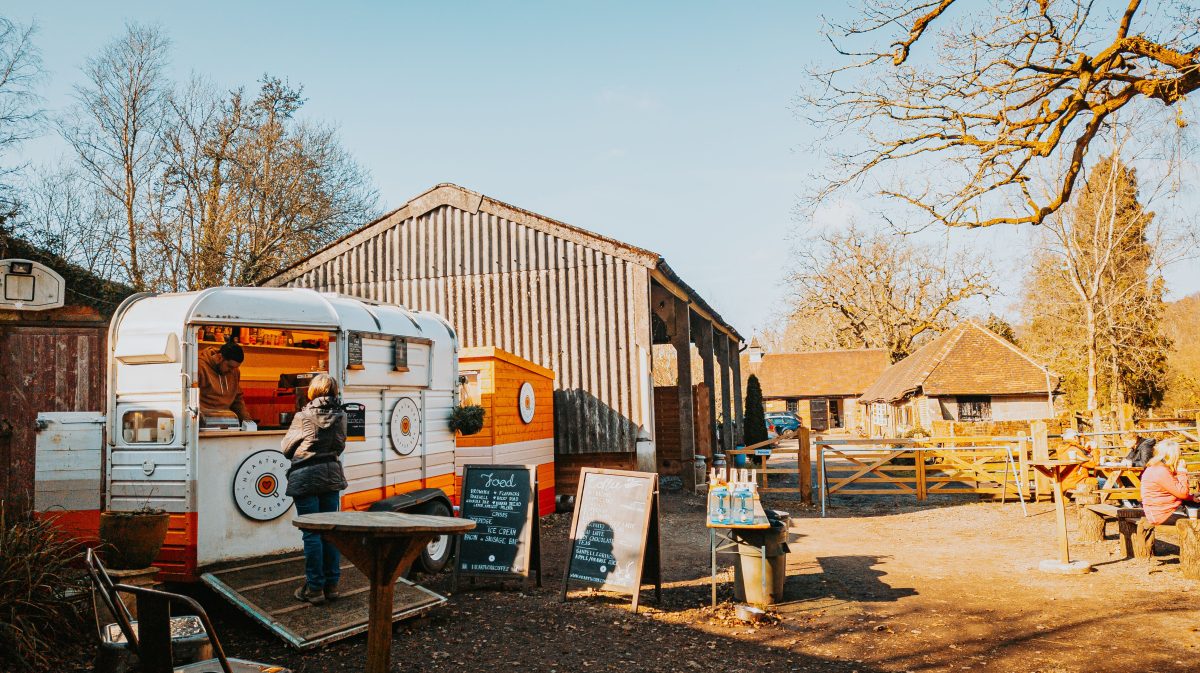
A food truck doesn’t have a fixed internet connection, a full-size till setup, or even a guaranteed power source at every location. It might run a lunchtime spot in one part of the city on Monday and cater a private event across town on Friday, often at a site with patchy mobile signal and no dedicated Wi-Fi. Most POS software assumes a stable, fixed environment. Food truck POS software is built around the opposite assumption, that the connection might drop, the location will change, and the hardware needs to survive being packed up and moved every single day.
Here’s what that actually means for a UAE food truck operator, and why the requirements look so different from a fixed restaurant kitchen.
Table of Contents
Why Food Trucks Need POS Software Built for Mobility
A fixed restaurant can rely on a stable internet line, a permanent power supply and a till that never leaves the counter. None of that holds for a food truck, which might operate from a different site or event every day, sometimes with no guaranteed connectivity at all. The software has to keep working regardless, taking orders, processing payments and tracking stock, whether the truck is parked in a busy mall zone with strong signal or a private event site with none.
The menu itself also tends to be smaller and more focused than a full restaurant’s, since a truck has neither the kitchen space nor the prep time to run a large, varied menu. That simplicity actually plays to the strengths of purpose-built food truck POS software, which is designed around a compact, fast-changing operation rather than a sprawling one.
Offline Mode and Unreliable Connectivity
Offline mode is arguably the single most important feature for a food truck POS. When there’s no signal, the system needs to keep taking orders and processing payments locally, storing every transaction until a connection returns, then syncing automatically without anyone having to manually re-enter a day’s worth of sales. Losing this capability doesn’t just mean an inconvenience, it means turning away paying customers because the till physically can’t process a sale.
This matters more in the UAE than it might elsewhere, since food trucks frequently work events at parks, beachfront areas, industrial zones and private venues where mobile coverage can be inconsistent even in a well-connected country. A system that quietly queues transactions in the background, rather than freezing or refusing to take an order, is what keeps service moving through a signal dead zone instead of stalling the whole line.
Compact, Portable Hardware
A food truck’s kitchen is already tight on space, which leaves little room for a bulky till setup. Compact tablet-based POS hardware, often battery-powered or running off a small power bank, fits into a food truck’s limited counter space without adding to the clutter. The same setup usually needs to be quick to pack away at the end of service and just as quick to set up again at the next location, since a food truck’s day often includes breaking down and moving entirely.
Durability matters here too. Hardware that sits inside a small metal kitchen through a UAE summer needs to tolerate heat and constant movement far better than a till bolted to a countertop indoors, so lightweight, rugged devices are generally a better fit than repurposed retail equipment.

Mobile and Contactless Payment Acceptance
UAE customers increasingly expect to tap a card or phone rather than pay cash, and a food truck can’t afford to lose sales over payment friction. A wireless card reader paired with the POS lets staff take contactless payments anywhere around the truck, not just at a fixed counter, which matters during a busy event where the queue might stretch well beyond arm’s reach of a stationary till.
Supporting multiple payment types in one flow, cash, card and digital wallets, also avoids the awkward moment of a customer being turned away because the truck only accepts one form of payment that day. For a business that depends heavily on quick, high-volume transactions, removing that friction has a direct effect on how many people in a queue actually complete their order instead of walking off.

Multi-Location and Event-Based Operations
Food trucks in Dubai generally operate from municipality-approved sites and permitted events rather than roaming freely, and permits are issued per location or event rather than as a blanket citywide approval. Dubai Municipality’s food permits and approvals framework outlines exactly how this works, including the site-specific and event-specific nature of food truck operating permits. That structure makes location tracking useful for compliance as much as for business insight.
Cloud-based reporting lets an owner see sales broken down by location and date, so decisions about which events or sites are worth returning to are based on real numbers rather than a gut feeling. For operators running more than one truck, the same dashboard consolidates performance across the whole fleet instead of tracking each truck’s numbers separately, which becomes essential once a single owner is juggling multiple permits, multiple sites and multiple daily schedules at once.
Inventory Tracking on a Moving Kitchen
Space constraints mean a food truck can’t carry as much backup stock as a full restaurant kitchen, which makes running out of a key ingredient mid-service a real risk rather than a minor inconvenience. Recipe-level stock tracking flags low ingredient levels before they run out entirely, so an item can be pulled from the menu for that shift rather than staff discovering the shortage only when an order comes in.
This same data also helps plan how much to prep and load before heading out each day, reducing both the risk of running short and the waste of over-preparing food that never sells. Over time, sales history by location becomes a useful guide for prep planning too, since a Thursday night food festival and a quiet weekday office-park lunch spot call for very different quantities loaded onto the truck that morning.
Conclusion
A food truck’s biggest operational challenge isn’t the menu, it’s the fact that almost nothing about its environment is fixed: not the location, not the connectivity, not even the power source some days. Purpose-built food truck POS software is designed around that reality, staying online through offline mode, fitting into limited counter space, accepting payment anywhere around the truck, and tracking performance across shifting locations and events. For UAE food truck operators, that reliability is what keeps service running no matter where the truck ends up parked, and it’s the difference between software that gets in the way and software that simply works, wherever the day takes the truck.
Frequently Asked Questions
1. What happens to sales data if the connection drops mid-service?
Offline mode stores every transaction locally on the device and syncs automatically once a connection is restored, with no manual re-entry needed.
2. Can one food truck POS account cover multiple trucks?
Yes, cloud-based reporting consolidates sales and performance data across an entire fleet of trucks into a single dashboard.
3. Does the POS need a power source to run all day?
Most compact food truck POS hardware runs on battery or a power bank for a full shift, though a vehicle power source can extend runtime further.
4. How does VAT invoicing work for a mobile food business?
TRN-compliant invoices are generated automatically on every sale regardless of location, and synced centrally once connectivity is available.
5. Can a food truck track ingredient stock the same way a restaurant does?
Yes, recipe-level tracking works the same way, deducting ingredient quantities per dish sold, which is especially useful given a food truck’s limited stock capacity.
Ready to run your food truck without connectivity headaches? Explore iTudeTech’s food truck POS software or get in touch with our team to see how it fits your setup.