Coffee Shop POS Software in the UAE: Modifiers, Peak-Hour Speed and Loyalty
August 28, 2026
How Bakery POS Software Reduces Daily Waste and Manages Custom Cake Orders
September 2, 2026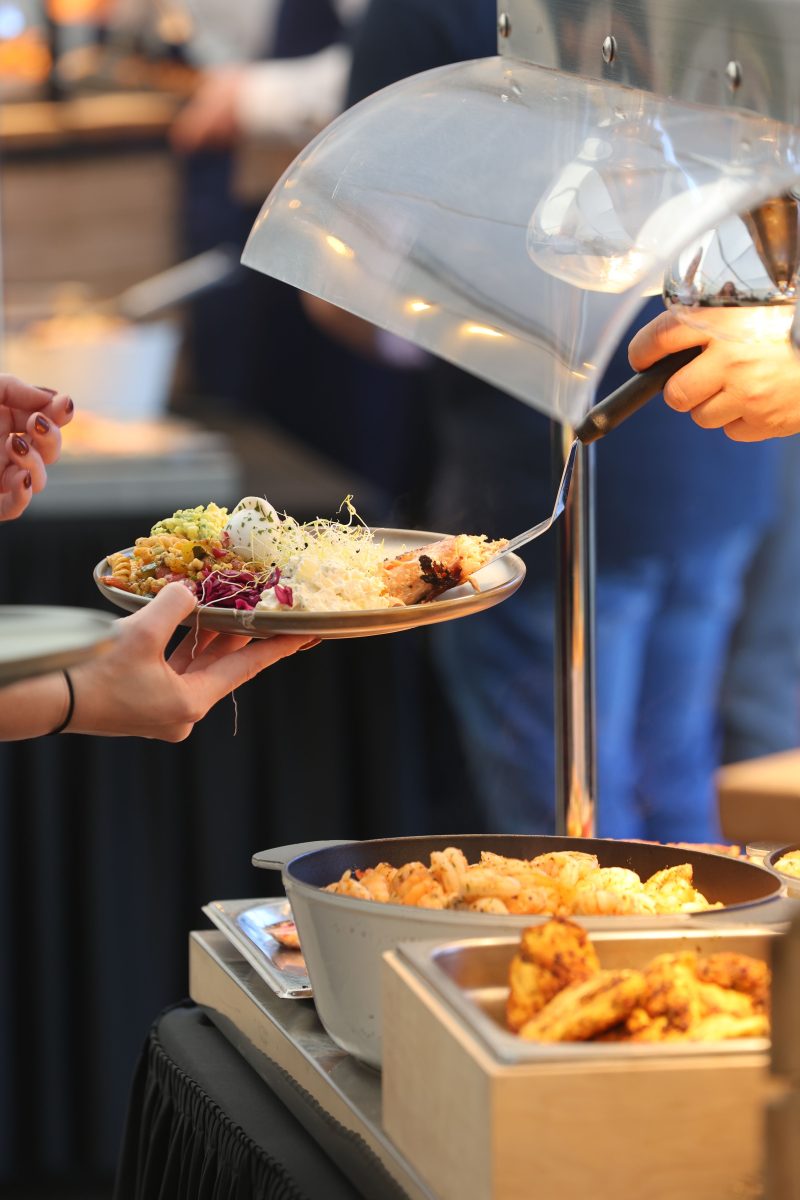
A cafeteria has a problem no restaurant shares: almost everyone eats at exactly the same time. A corporate canteen, a school lunch hall, a hospital staff dining room or a labour accommodation mess hall might serve several hundred people inside a forty-minute window, then sit nearly empty for the rest of the day. On top of that, the person eating often isn’t the person paying. Meals may be fully or partly subsidised by an employer, billed to a department, or covered by a prepaid student account. Cafeteria POS software exists because neither of those realities fits a standard restaurant till.
Here’s how that works in practice for a UAE cafeteria or canteen operation.
Table of Contents
Why Cafeterias Don’t Fit a Standard Restaurant POS
Restaurant POS software assumes a customer walks in, orders, and pays for what they ordered. A cafeteria breaks that assumption in three places at once. The diner is usually a known individual rather than an anonymous walk-in, the price they pay may differ from the price of the meal, and the entire day’s revenue is compressed into one or two short service windows.
There’s also no table service to manage and no bill to split. What matters instead is identifying who is taking a meal, applying the right entitlement or subsidy to them, and moving them past the till fast enough that the queue never reaches the door.
Subsidised and Employer-Funded Meal Plans
Subsidy handling is the feature that most clearly separates cafeteria POS software from everything else. A meal priced at AED 20 might cost the employee AED 5, with the remaining AED 15 billed back to their employer. The system needs to calculate that split automatically at the point of sale, record both halves separately, and produce a clean monthly invoice for the funding organisation.

Entitlement rules add another layer. Some organisations allow one subsidised meal per person per day, others give different allowances by shift, department or staff grade. Enforcing those rules in software rather than by asking a cashier to remember them is what keeps subsidy spending predictable and disputes rare.
Cashless Payments: Cards, Badges and Accounts
Cash slows a cafeteria line down more than anything else, which is why most operations move to a cashless model. Staff tap an existing ID badge or an RFID card, students use a prepaid account topped up by a parent, and the balance or entitlement is checked and deducted in about a second.
Because the card is tied to a known person, the system also knows immediately which subsidy tier or allowance applies, so identification and payment happen in the same tap rather than as two separate steps at the till.
Handling the Lunch Rush Without a Queue
Cafeteria demand is extraordinarily concentrated. A site that serves six hundred meals a day may serve five hundred of them between 12:30 and 1:15, which means throughput per till is the single biggest operational constraint. Fixed meal-deal buttons, a compact menu layout and one-tap combo pricing all matter far more here than the deep customisation a coffee shop or restaurant needs.

Self-service kiosks help further by letting diners scan their own selections and tap their card without waiting for a cashier, spreading the same rush across more parallel checkout points rather than funnelling everyone through one or two staffed tills.
Portion Control, Waste and Meal Forecasting
Cafeterias cook to a forecast rather than to order, which makes over-production the default source of waste. Preparing four hundred portions when three hundred and twenty people turn up means eighty meals discarded, every single day. Historical sales data by day, shift and menu item turns that forecast from an estimate into something closer to a calculation.
Recipe-level ingredient tracking supports the same goal from the supply side, showing exactly how much of each ingredient a given service consumed. The principle mirrors what we covered in our guide to restaurant inventory management and waste prevention, though a cafeteria’s fixed daily menu makes the forecasting side considerably more predictable than a restaurant’s.
Reporting for Finance and Facility Managers
A cafeteria usually reports to a finance or facilities team rather than a restaurant owner, and those teams need different numbers: total subsidy cost for the month, meals taken per department, cost per head, and uptake rates against headcount. Cafeteria POS software should produce these directly instead of requiring someone to rebuild them from raw transaction exports in a spreadsheet.
For organisations running canteens across several sites, a cloud-based setup consolidates all of that into one view, making it straightforward to compare uptake and cost per head between locations. Connecting the POS to accounting software then pushes subsidy billing and revenue straight through to the finance ledger without manual re-entry.
Conclusion
A cafeteria’s defining challenges are that everyone eats at once and that the diner often isn’t the payer. Purpose-built cafeteria POS software addresses both directly: automatic subsidy splits and entitlement rules, badge or account-based cashless payment, throughput built for a forty-minute rush, forecasting that cuts over-production, and reporting shaped for finance teams rather than restaurateurs. For UAE corporate canteens, schools, hospitals and staff dining facilities, that combination is what keeps the queue moving and the subsidy spend accountable.
Frequently Asked Questions
1. How does a subsidised meal get split between employer and employee?
The POS applies the subsidy rule automatically at checkout, charging the employee their share and recording the employer’s portion for later invoicing.
2. Can staff pay with their existing ID badge?
In most cases yes, an existing RFID staff badge can be linked to a meal account so no separate payment card is needed.
3. What happens if the system goes offline during lunch?
Offline mode keeps recording transactions and entitlements locally, then syncs automatically once connectivity returns, so service isn’t interrupted.
4. Can one system handle several cafeterias across different sites?
Yes, a cloud-based setup centralises menus, subsidy rules and reporting across every location in one dashboard.
5. Does cafeteria POS software help reduce food waste?
Yes, historical uptake data by day and shift makes production forecasting far more accurate, which directly reduces the over-preparation that drives most cafeteria waste.
Running a canteen that needs to serve hundreds in under an hour? Explore iTudeTech‘s cafeteria POS software or get in touch with our team to see how it fits your site.