How Bakery POS Software Reduces Daily Waste and Manages Custom Cake Orders
September 2, 2026
Menu Engineering with POS Data: Finding Your Most Profitable Dishes
September 4, 2026
A laundry business handles something no other retailer does: it takes possession of a customer’s property, changes it, stores it for days, and has to hand back the exact same item. Not an equivalent item, the same one. A supermarket that loses a tin of beans reorders a tin of beans. A laundry that loses a tailored jacket has a genuine problem, and no amount of apologising replaces a garment that was one of a kind.
That custody problem is the reason laundry POS software looks so different from an ordinary shop till. Alongside it sits a second complication: the money often arrives long after the work is done, and increasingly from a hotel or corporate account rather than the person who dropped the bag off.
Table of Contents
Why Laundry Is a Custody Business, Not a Retail One
Almost every assumption a standard POS makes breaks down in a laundry. Stock isn’t owned by the business, it’s owned by the customer. The transaction doesn’t complete at the counter, it completes days later on collection. And an item isn’t interchangeable with an identical one, because there is no identical one.
| What a standard retail POS assumes | What a laundry actually needs |
|---|---|
| The business owns the stock | The customer owns every item on the premises |
| One item is interchangeable with another | Every garment must return to its exact owner |
| The sale ends at payment | The job runs for days across several stages |
| Price is per product | Price is per garment type and service combination |
| The buyer is the payer | A hotel or company may be billed monthly instead |
Garment Tagging and Barcode Tracking
Every item that enters the shop needs a tag that survives washing, pressing and handling, and that ties the garment back to a specific customer and order. Barcode or RFID tags attached at intake do exactly that, and each garment is scanned as it moves through the workflow: received, sorted, cleaned, pressed, quality checked, ready, collected.

The value shows up the moment something can’t be found. Instead of staff searching racks by memory, the system reports the last stage a garment was scanned at, which narrows the search from the whole shop to one station. Intake notes recorded against the item, existing stains, a missing button, a damaged zip, protect the business just as much, because they establish the condition of the garment before any work started.
Key takeaway
A laundry’s single biggest operational risk is losing a customer’s garment. Scan-at-every-stage tracking turns that from a search through racks into a database lookup.
Service-Based Pricing and Add-Ons
Laundry pricing is a matrix rather than a list. A shirt costs one price to wash and press, another to dry clean, and another again for express same-day turnaround. Curtains, carpets and wedding dresses may be priced by size or weight rather than per piece. On top of that sit add-ons: stain treatment, minor repairs, starch level, protective packaging.
The POS needs to hold that entire matrix so a counter staff member selects garment type and service rather than calculating anything. It also needs to handle express surcharges cleanly, since a same-day job usually carries a premium and needs flagging in the workflow so production actually prioritises it rather than treating it like any other ticket.
Pickup, Delivery and Route Scheduling
A growing share of UAE laundry volume never comes through the shop door at all. Customers book a collection from home or the office, and the same van returns the finished items days later. That turns a counter business into a logistics one, with time windows to hit and drivers to coordinate.
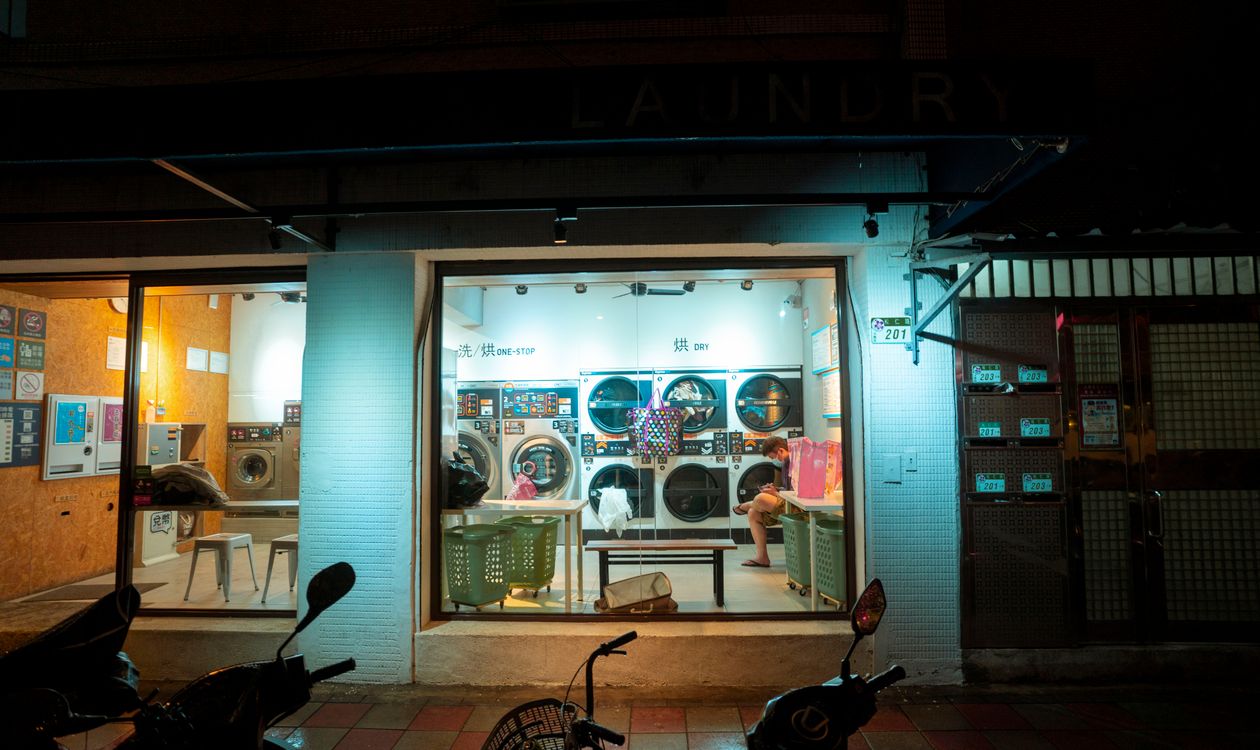
Laundry POS software handles this by scheduling pickups and deliveries against customer addresses and time slots, grouping them into sensible routes, and letting drivers confirm collection or handover on a mobile device so the record updates immediately rather than at the end of a shift. Without that, a missed collection usually surfaces only when the customer calls to ask where the van was.
Hotel and Corporate Contract Billing
Hotels, clinics, salons, gyms and construction accommodation are steady, high-volume laundry clients across the UAE, and they don’t pay per bag at a counter. They operate on negotiated rates, sometimes different rates per item category, and settle on a monthly invoice covering hundreds or thousands of items.
That requires the POS to hold contract-specific price lists per client, accumulate every job against the right account, and generate a consolidated, TRN-compliant invoice at the end of the billing period. Connecting the system to accounting software then carries those invoices and receipts through to the ledger without anyone rekeying totals, which matters when a single hotel account can involve thousands of individual line items in a month.
Still tracking garments on paper tickets?
Tell us how your laundry handles intake, delivery and hotel billing today, and we will show you what the same workflow looks like with proper tracking behind it.
Book a Free DemoCustomer Notifications and Uncollected Items
An automated message when an order is ready removes a surprising amount of friction, cutting the “is it done yet” phone calls and getting items collected sooner. That second effect matters more than it first appears, because uncollected garments occupy rack space that a busy laundry doesn’t have to spare.
Reporting on ageing uncollected items is the practical companion to this. A list of everything ready for more than two or three weeks lets staff chase specific customers deliberately rather than gradually surrendering storage space to garments nobody has come back for.
Key takeaway
Ready notifications are usually sold as a customer service feature, but their real operational payoff is freeing up rack space that uncollected orders would otherwise consume.
Conclusion
A laundry is judged on whether the right garment comes back, in the right condition, when it was promised. Everything a laundry POS does supports that single outcome: tagging and scanning so nothing is lost, a pricing matrix that keeps quoting consistent, scheduled routes so collections and deliveries actually happen on time, contract billing so hotel accounts reconcile cleanly, and notifications that clear finished work off the racks. For UAE laundries and dry cleaners, that’s the difference between a business that scales past one branch and one that spends its days searching for a missing jacket.
Frequently Asked Questions
1. How does garment tagging actually work?
Each item receives a barcode or RFID tag at intake that survives cleaning, and it is scanned at every stage so its location and status are always known.
2. Can the system handle both walk-in and delivery customers?
Yes, counter orders and scheduled pickups feed into the same job queue, with delivery orders carrying address and time slot details alongside them.
3. How is hotel contract billing different from a normal sale?
Contract clients use negotiated rate cards and are invoiced periodically for accumulated jobs, rather than paying per transaction at the counter.
4. What happens when a customer disputes a missing garment?
The scan history shows exactly which stages the item passed through and where it was last recorded, which usually resolves the question quickly.
5. Does laundry POS software work across multiple branches?
Yes, a cloud setup lets branches share one customer database and a central plant, so an item dropped at one shop can be processed centrally and returned to another.
Losing track of garments or chasing hotel invoices? Explore iTudeTech‘s laundry POS software or get in touch with our team to see how it fits your shop and delivery routes.