How Salon POS Software Handles VAT Billing in UAE
July 19, 2026
How Hair Salon POS Speeds Up Client Checkout
July 28, 2026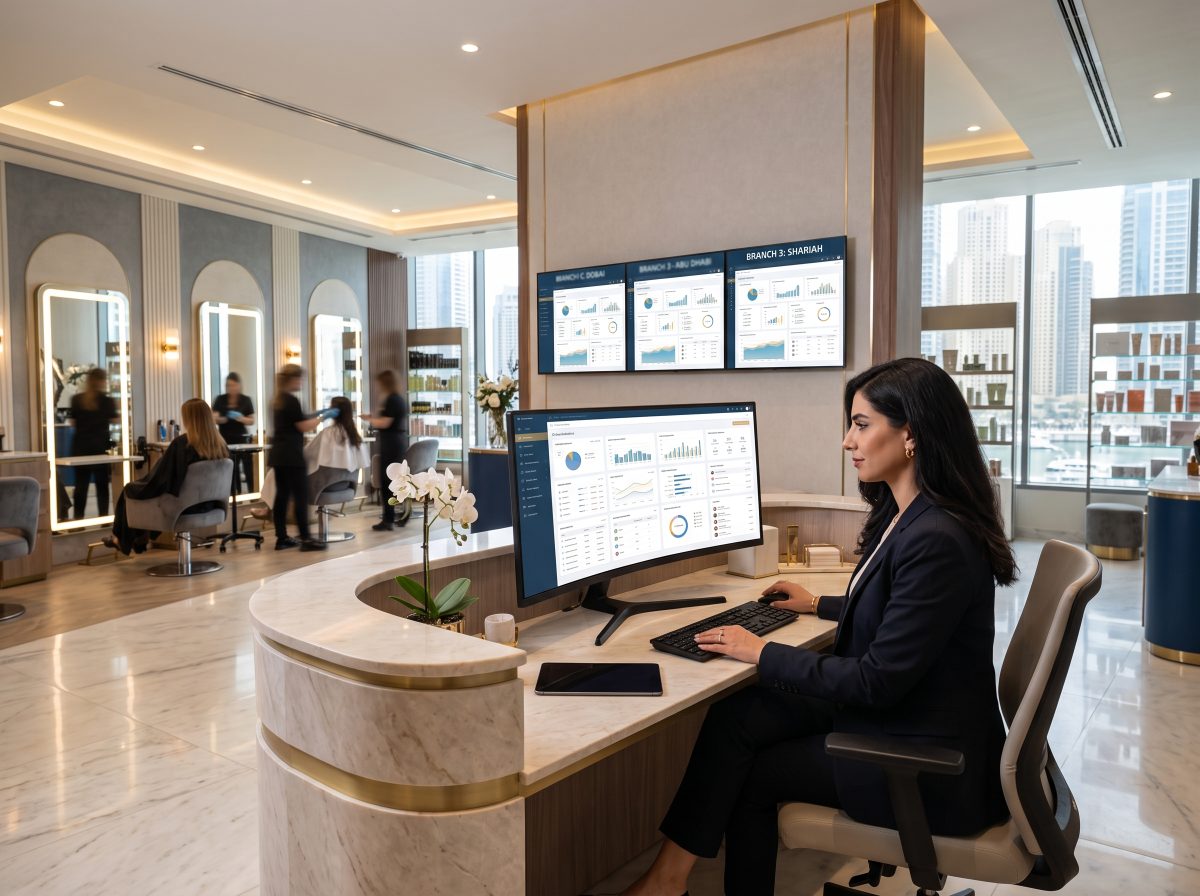
Running a single salon in the UAE already means juggling appointments, inventory, staff commissions, and VAT records every day. Add a second or third branch, and the same tasks multiply across separate systems, separate spreadsheets, and separate logins. Many salon groups discover too late that fragmented software creates more problems than it solves, from mismatched customer records to inconsistent pricing between outlets. This article looks at why UAE salon groups with more than one branch benefit from running on a single, unified point of sale platform rather than stitching together disconnected tools for each location.
For salons expanding into a second or third branch, the technology decision usually comes down to whether each outlet operates in isolation or connects to a centralised salon management platform. Isolated systems might work well enough for one location, but they quickly become a liability once staff schedules, product stock, and client histories need to move between branches without duplication.
Table of Contents
The Hidden Cost of Fragmented Systems
When each branch uses its own POS, a client who visits the main branch for a haircut and drops into a second branch for a manicure often has to start their profile over again. Staff hours, product stock, and daily sales all get recorded in silos that management has to reconcile manually at month end. That reconciliation work adds hours to already busy weeks, and small entry errors compound the longer a group operates this way, quietly eating into margins that ownership rarely traces back to the root cause.
A shared system does not mean every branch runs identical services. It means the data layer underneath is common, so ownership can see the full business rather than a set of disconnected outlets. In practice, this usually includes:
- One client database that follows the customer between branches
- A single inventory ledger showing stock levels at every outlet in real time
- Centralized staff performance and commission tracking across locations
- One compliance and financial reporting layer for the entire group
None of this requires every branch to look or operate the same way. It simply means the numbers underneath stay connected, so a decision made at one branch does not have to be re-entered or reconciled somewhere else.
Consistent Financial Reporting and Loyalty Across Branches
Financial reporting is one of the clearest places where fragmented systems cause pain. A group with three branches running three separate systems ends up with three separate tax records that someone has to combine manually before filing. A shared platform applies the same VAT billing rules across every branch, so the numbers already match before a single report is generated, saving the finance side of the business real time each quarter.
Reward points earned at one branch should still be usable at another, but this only works if the loyalty engine sits above the branch level rather than inside each individual till. Salon groups that build loyalty tracking into a single shared platform give customers one consistent membership experience, regardless of which branch they walk into, which tends to matter more to repeat customers than owners initially expect.
Appointment Scheduling and Staff Coordination
Booking conflicts are a common headache for growing salon groups, particularly when a stylist covers shifts across more than one branch. A shared CRM system keeps every branch’s calendar visible from one place, so a stylist cannot accidentally get double-booked at two locations on the same afternoon.
This matters even more once appointment volume grows across branches. A system built for multi-branch appointment scheduling keeps bookings visible group-wide instead of isolated per branch, which is what most groups eventually need anyway once they move past a single location.
Different Salon Services Under One System
Many UAE groups do not run identical branches. One location might focus on grooming, another on general beauty services, and the underlying system still needs to flex to each service type without losing its unified backbone. Barbershops, for instance, depend heavily on chair turnover and commission accuracy, and grouping this data centrally makes it easier to compare barbershop revenue between outlets rather than guessing which branch is actually performing best.
Owners weighing a general system against something built for a specific service line often find it useful to look at this salon software comparison before deciding, since the right choice depends on how similar or different the branches actually are, and forcing every branch onto the wrong type of system tends to cause more friction than it solves.
Reporting and the Bigger Picture
Owners managing multiple branches need to compare performance across locations without pulling numbers from separate systems by hand. Groups researching what to look for often start by reviewing beauty business reporting tools, since dashboard visibility across branches tends to matter more once a salon group grows past a single location.
Salon groups in the UAE that have moved to a shared platform through providers like iTudeTech typically describe the same shift: less time spent reconciling numbers between branches, and more time actually reviewing what those numbers mean for the business.
A single branch can survive on a basic, standalone system for a while. Once a second or third branch enters the picture, the cost of fragmented software starts showing up in wasted admin hours, inconsistent customer experiences, and reporting that never quite matches. A shared POS system does not remove the differences between a barber chair and a general salon counter, but it does give ownership one accurate view of the entire group instead of several partial ones.
Frequently Asked Questions
Does a shared POS system work if my branches offer different services?
Yes, a shared platform can support different service types per branch while still keeping data centralized.
Can staff be scheduled across more than one branch on the same system?
Yes, a unified system shows all branch calendars together, which prevents double-booking.
Will customers earn and redeem loyalty points at any branch?
Yes, as long as the loyalty program is tied to the shared system rather than an individual branch’s till.
Does a multi-branch POS system simplify VAT filing?
Yes, it applies the same tax logic across branches so records already match before filing.
Is switching from separate systems to one shared platform a difficult process?
Most salon groups migrate branch by branch, so the transition rarely requires shutting down operations.