How Salon CRM Software Manages Appointments in the UAE
May 11, 2026
Why UAE Spas Need a Dedicated POS System in 2026
June 3, 2026
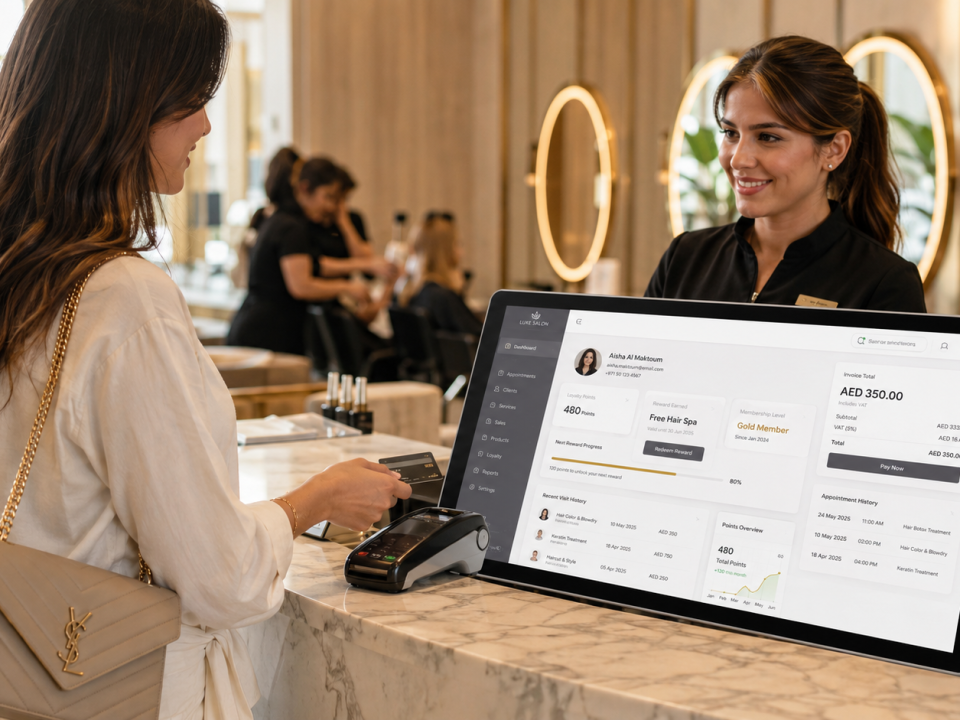
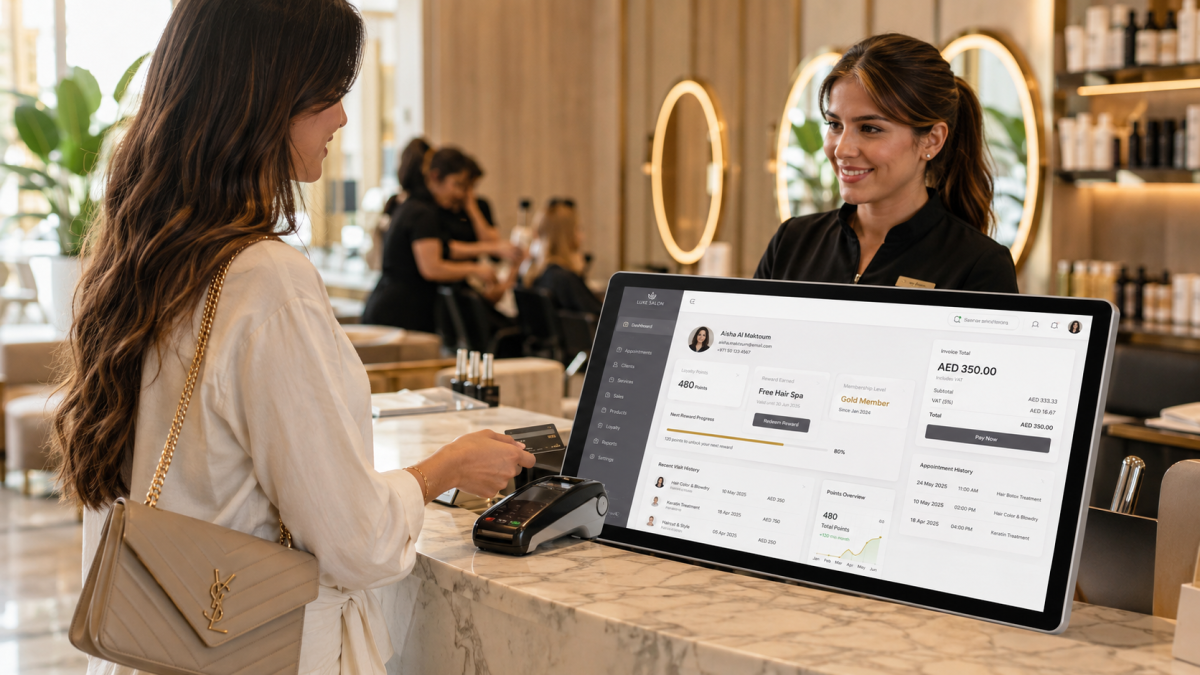
Choosing the right software for your salon starts with one critical question, does your business need a hair salon POS or a general salon point of sale system? Many salon owners assume they are the same thing, but the differences between the two can directly affect how smoothly your daily operations run, how satisfied your clients are, and ultimately, how fast your business grows. If you are a hair salon owner or planning to open one, understanding these distinctions upfront can save you time, money, and a lot of frustration down the road.
What Is a General Salon POS?
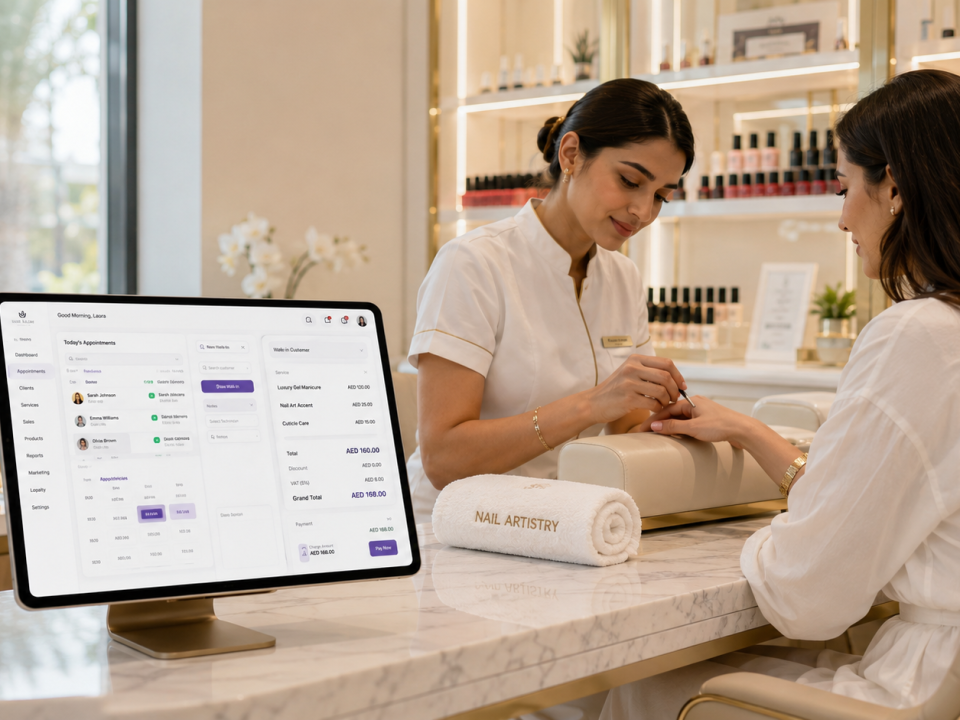
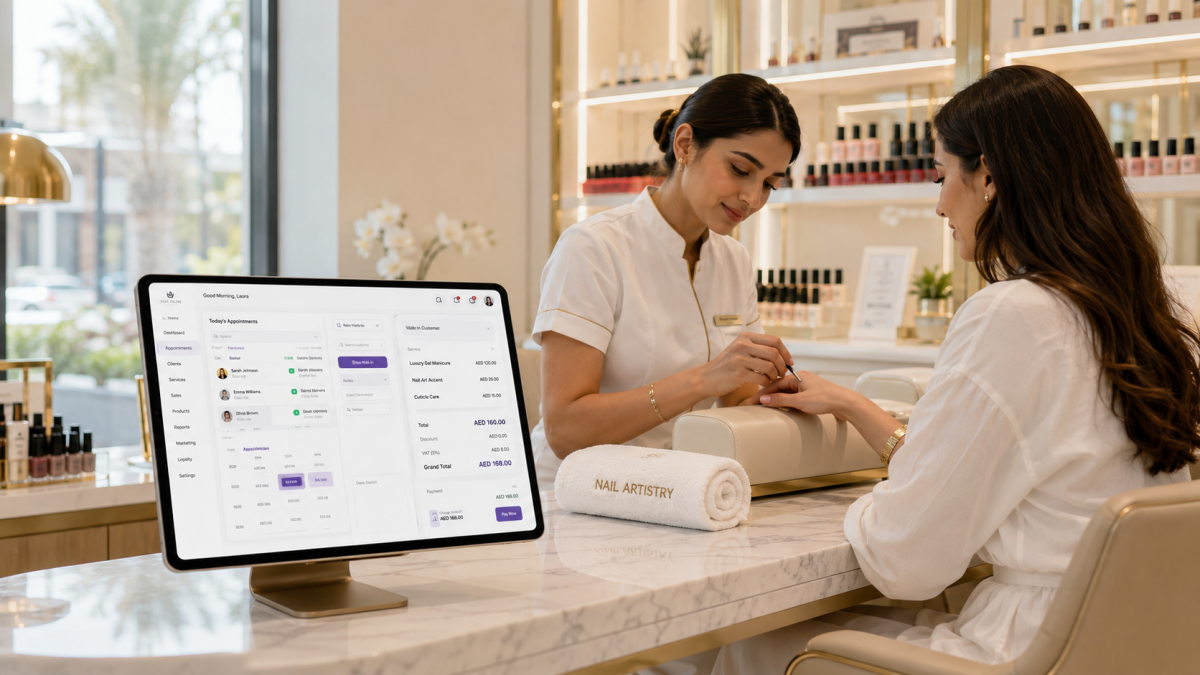
A general salon point-of-sale system is a broad-purpose software solution built to serve multiple types of beauty businesses, nail salons, spas, skin care clinics, waxing studios, and more. It covers the fundamental needs that most beauty and wellness businesses share, including appointment booking, payment processing, basic inventory management, client profiles, staff scheduling, and loyalty programs.
These systems are designed with flexibility in mind. They work well for multi-service beauty businesses where no single service type dominates. However, that same flexibility can be a limitation, because being built for everyone means it may not be optimized for anyone in particular.
What Is a Hair Salon POS?
A hair salon POS is a purpose-built point of sale system designed specifically around the workflows, services, and client expectations of hair salons. It goes beyond basic billing and scheduling to address the unique operational demands that hair businesses face daily. According to the salon POS research by Square, industry-specific tools consistently outperform general solutions in scheduling accuracy and client retention features..
Stylist-Specific Appointment Management
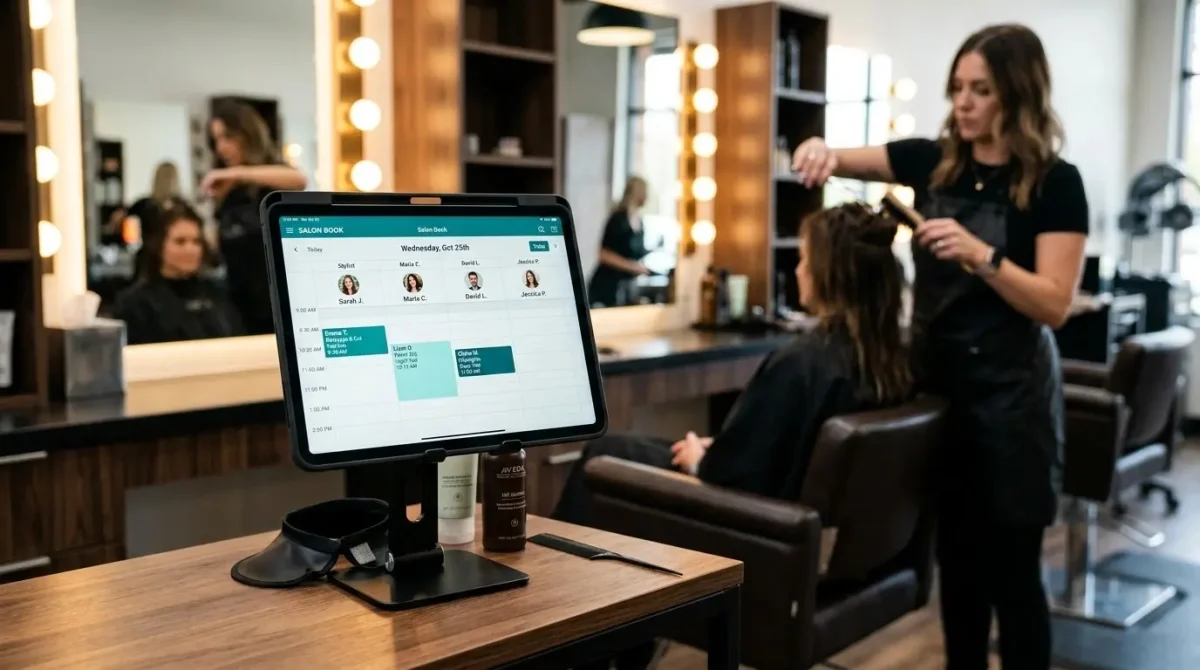
Hair salons depend heavily on which stylist a client books with. A hair salon POS allows clients to book with specific stylists, tracks individual performance, and manages chair-based scheduling, something a general system often oversimplifies.
Hair Service Menu Customization
From balayage to keratin treatments and scalp care, hair services vary widely in time, products used, and pricing tiers. A hair-focused POS lets you build a detailed, structured service menu with add-ons and time buffers built in, so your schedule always reflects reality.
Product and Chemical Inventory Tracking
Hair salons use professional-grade products, colour formulas, treatments, and retail haircare lines. A specialised POS software for hair salon tracks product consumption per service, alerts you on low stock, and helps manage purchase orders for salon supplies.
Key Differences Between Hair Salon POS and General Salon POS
Appointment Depth
A general salon POS handles basic booking by service type or time slot, which works fine for simple operations. A hair salon POS goes deeper, supporting stylist-specific booking, multi-service appointments, and prep or processing time buffers that keep your schedule from falling apart mid-day.
Service Complexity Handling
General systems are built around flat-rate, straightforward services. A hair salon POS, on the other hand, handles tiered pricing, service add-ons, and variable durations, so a client booking a colour treatment followed by a blow-dry is scheduled and billed accurately without any manual adjustment.
Inventory Management
- General Salon POS: Tracks retail products at a surface level
- Hair Salon POS: Monitors back-bar product usage, chemical formulas per client, and retail hair care inventory separately
Client History and Preferences
- General Salon POS: Stores visit logs and basic preferences
- Hair Salon POS: Records hair colour formulas, treatment history, strand condition notes, and stylist observations, enabling truly personalized return visits
Staff and Commission Tracking
Both systems track staff commissions, but the depth is different. A general salon POS gives you an overall figure per staff member. A hair salon POS breaks it down by service type, stylist tier, and product upsells, which makes a real difference when you are managing a team of specialists each with their own client base and performance targets.
Side-by-Side Comparison Table
| Feature | Hair Salon POS | General Salon POS |
| Appointment Booking | Stylist-specific, with processing time buffers built in | Time-slot based, no stylist-level depth |
| Client Records | Color formulas, strand condition, full treatment history | Basic visit logs and general preferences |
| Inventory Tracking | Separates back-bar chemicals from retail products | General retail stock tracking only |
| Commission Reporting | Broken down by stylist, service type, and product upsells | Overall commissions per staff member |
| Best Suited For | Dedicated hair salons, color studios, multi-stylist teams | Spas, nail salons, and mixed-service beauty studios |
When Should You Choose a General Salon POS?
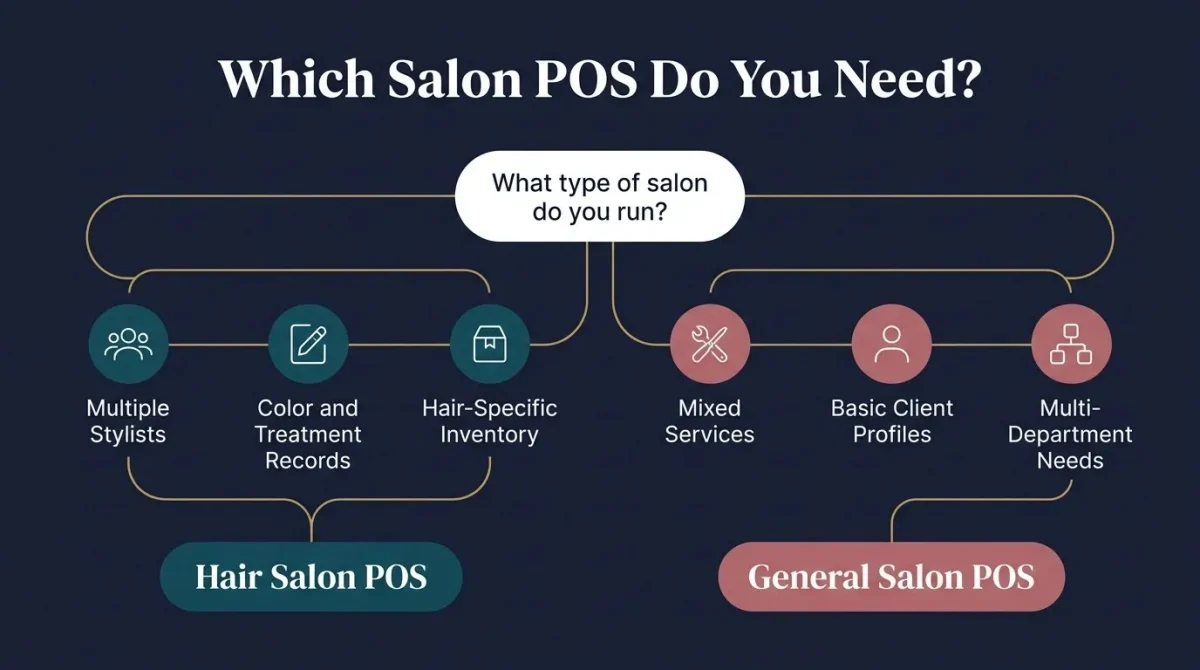
A general salon POS makes the most sense when your business offers a wide mix of services – nails, skin, wax, and hair, under one roof. It is the right fit for multi-service spas or beauty studios where you need one platform to manage completely different service departments without deep specialization in any one area. If you are in the early stages and want a cost-effective, flexible starting point, a general system gives you that room to grow in multiple directions.
When Should You Choose a Hair Salon POS?
A hair salon POS is the right choice when hair services are your core or only offering and you manage a team of stylists with their own individual clientele. If you sell professional hair care products alongside your services, need color and treatment records stored per client, or rely on precise scheduling that accounts for processing and drying time, a specialized system will handle all of that without workarounds.
If hair is your business, then a system built around hair just performs better, fewer errors, more relevant data, and a smoother experience for both your staff and your clients. As noted by Square’s hair salon software guide, specialized POS systems reduce no-shows and administrative time significantly compared to generic booking tools.
Similarities You Should Not Overlook
While the differences are significant, both systems share important common ground. Both typically include VAT-compliant billing, digital payment support across cards and wallets, customer loyalty programs, and real-time reporting on sales and staff performance. Multi-branch support is also standard on most modern platforms, giving you centralized visibility whether you are managing one location or several.
The foundation is the same. It is the depth and specialization that sets them apart.
Making the Right Decision for Your Salon
Before you commit to any system, ask yourself five questions: What percentage of your services are hair-related? Do your stylists have personal client books? Do you track product usage per service or per client? How complex is your service menu? And are you planning to scale into multiple branches?
If most of your answers point toward hair-centric operations, a specialized hair salon POS will likely outperform a general solution in both day-to-day efficiency and long-term client retention. The more service-specific your workflows are, the more you will feel the gap between a purpose-built tool and a one-size-fits-all platform.
It is also worth thinking beyond just hair. Many salon businesses run grooming or barbering services alongside their primary offering, and those come with their own scheduling quirks, walk-in volumes, and commission structures. A purpose-built barber shop POS handles those workflows in a way a general system simply cannot replicate, which matters when your team is operating at full capacity during peak hours.
For salon owners in the UAE looking for a system that truly understands the beauty industry, ITUDE delivers both a specialized hair salon POS and a comprehensive general salon management platform, with VAT-compliant billing, real-time inventory tracking, stylist-level performance reports, and cloud-based multi-branch access all under one roof.
Conclusion
The difference between a hair salon POS and a general salon POS is not just about features on a checklist, it is about how well your software fits the real rhythm of your business. A general system offers flexibility; a hair salon system offers precision. If hair services are at the heart of what you do, investing in a platform built specifically for that environment will save time, reduce errors, and create a better experience for both your team and your clients. Match the tool to the trade, and everything else becomes easier.